

My 3 favourite photo books of 2025 and why print is best.
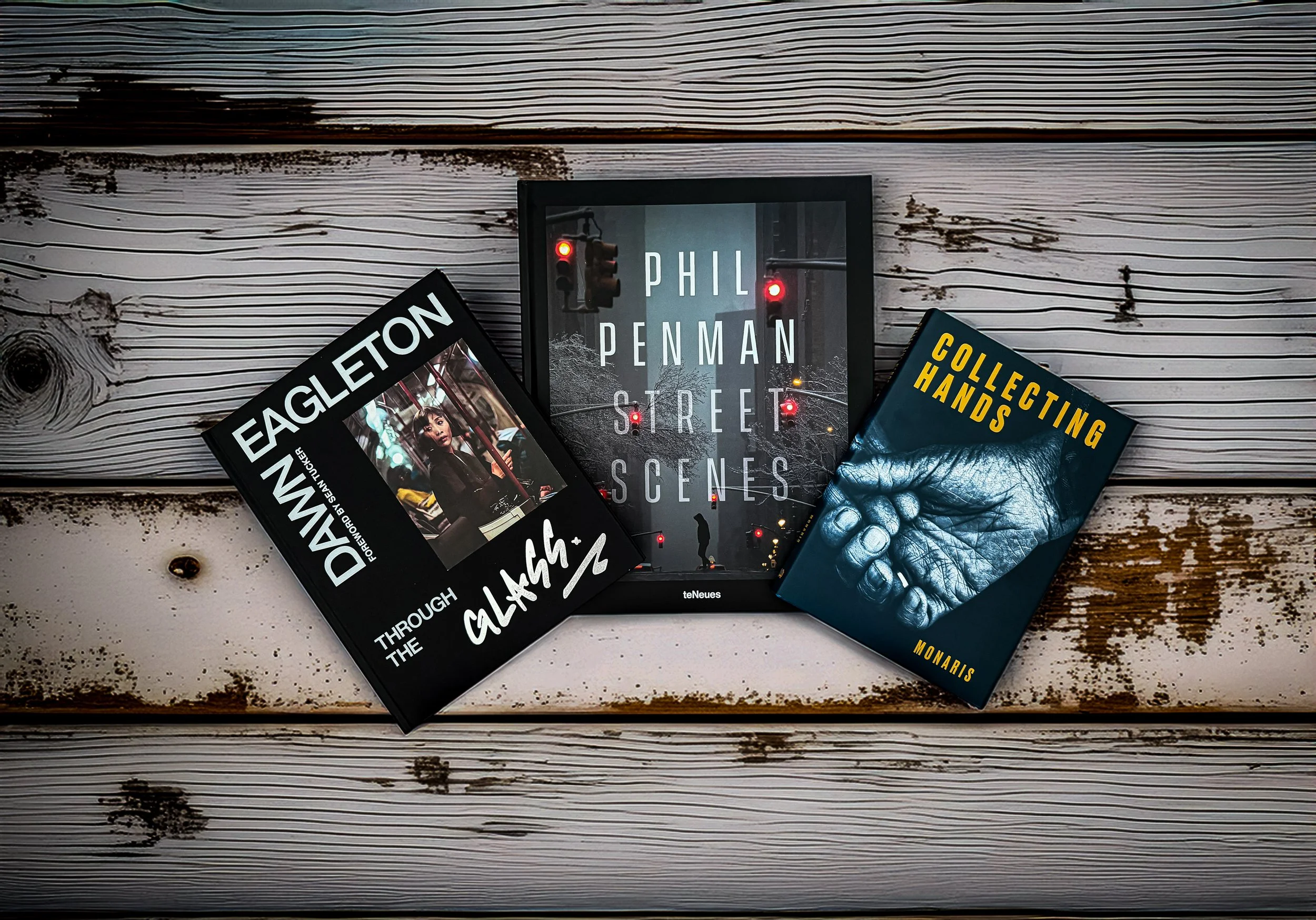
Favourite Photo Books of 2025
I’ve always gravitated toward photo books, not out of nostalgia, but because print asks something different of us. In a culture shaped by speed and endless scrolling, a book slows everything down. It has weight, sequence, intent. You don’t flick past a photograph in print, you arrive at it. You turn the page, you pause, you move on when you’re ready.
For me, this is where photography feels most honest. Images aren’t competing for attention or validation; they’re allowed to exist together, to breathe. Sequencing becomes part of the work. Silence matters. The book itself becomes a space for looking, not consuming.
Lately, I’ve been thinking more seriously about making my own photo book or a small run of zines. Not as a commercial goal, but as a way of committing to a body of work, a way of saying this belongs together. The books below have stayed with me throughout 2025 because they demonstrate that commitment in different ways, and because they quietly reinforce my belief in print as a meaningful endpoint rather than an afterthought.
This is street photography stripped back to instinct and timing. Street Scenes isn’t about spectacle or clever tricks, it’s about awareness. Penman’s images feel lived-in, as if the camera was already there before the moment arrived. What I like most is the restraint: strong compositions without shouting, humour without forcing it.
It’s the kind of book that reminds me why I enjoy walking with a camera in the first place, not to chase moments, but to notice them. In print, these images feel settled, resolved, allowed to exist without explanation. This is a truly special book produced by a true master of his craft.
Through the Glass — Dawn Eagleton
There’s a quiet tension running through Through the Glass. Reflections, layers, and partial views create images that feel slightly unresolved, in a good way. Nothing here is overly explained; you’re left to sit with the photograph and do some of the work yourself.
This is photography that trusts the viewer. The book format suits that trust, it gives the work space, rhythm, and silence. I find myself returning to it slowly, not to analyse, but to look again. It remains with me long after every viewing, it’s a beautiful project, collected in a very special way.
This book is deceptively simple. Hands, repeated, collected, yet each image feels distinct. Collecting Hands becomes less about the subject and more about gesture, texture, and presence. There’s something grounding about it, almost meditative.
What really stands out is the physicality of the book itself. Gatefolds, tracing paper inserts, and cut card elements are used in ways that feel innovative and original, without ever becoming unnecessary or gimmicky. It makes you use your hands, unfolding pages, lifting inserts, engaging with the object as much as the images. That interaction slows you down and reinforces the idea that this work belongs in print. The sequencing matters here; viewed together, the photographs start to speak quietly to one another. It’s a reminder that strong projects don’t always need complexity, just clarity of intent. I love this book!
Closing
What these books share isn’t style or subject, but conviction. They treat print not as an output, but as a language in its own right. In doing so, they push back against the idea that photographs are disposable or temporary.
They’ve also pushed me closer to making something of my own, a book, a zine, a small printed object, not to shout, but to gather images with care and give them a place to rest. Print, at its best, doesn’t ask to be seen quickly. It asks to be returned to.
That’s why these books matter to me. And why they’ll stay close, long after I’ve made arbitrary lists about them in a blog that no-one reads.
Later.
About the Author
Jay Kronis is a UK-based street and wildlife photographer whose work explores observation, environment, and quiet moments within everyday life. Alongside photography, he works in mental health care, an experience that informs his interest in attention, emotional space, and the relationship between people and place.